Ausgrid Outage Map,ready for every storm.
A real-time outage map built with Next.js and Google Maps for 1.8 million Ausgrid customers, designed to stay fast in the storms when people need it most.
- Client
- Ausgrid
- Year
- 2025
- Agency
- Switch
- Role
- Sole front-end developer
- Services
- Front-end build, Maps, Performance
- Sitecore Digital Impact Award Winner 2026
- Awarded to Switch
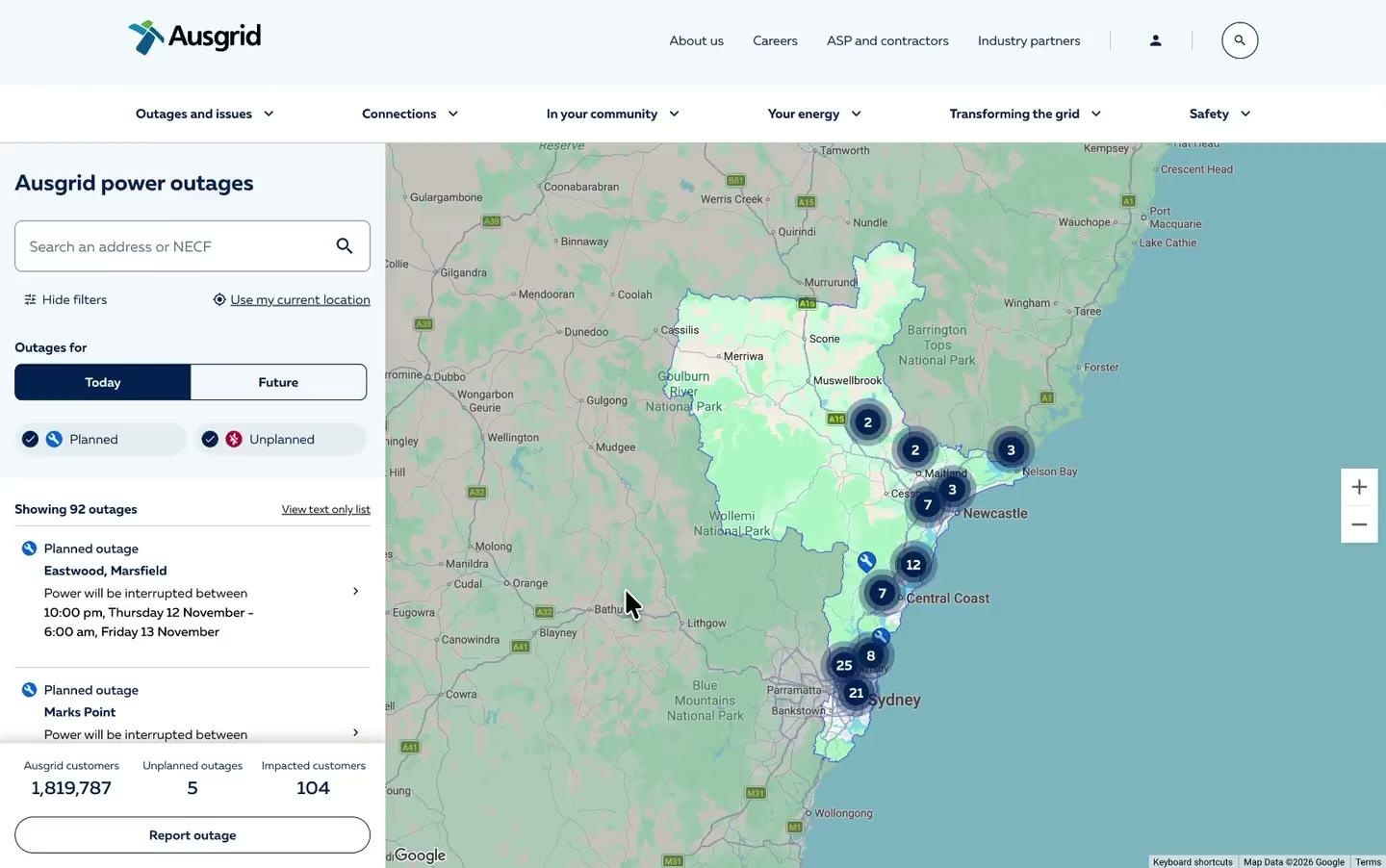
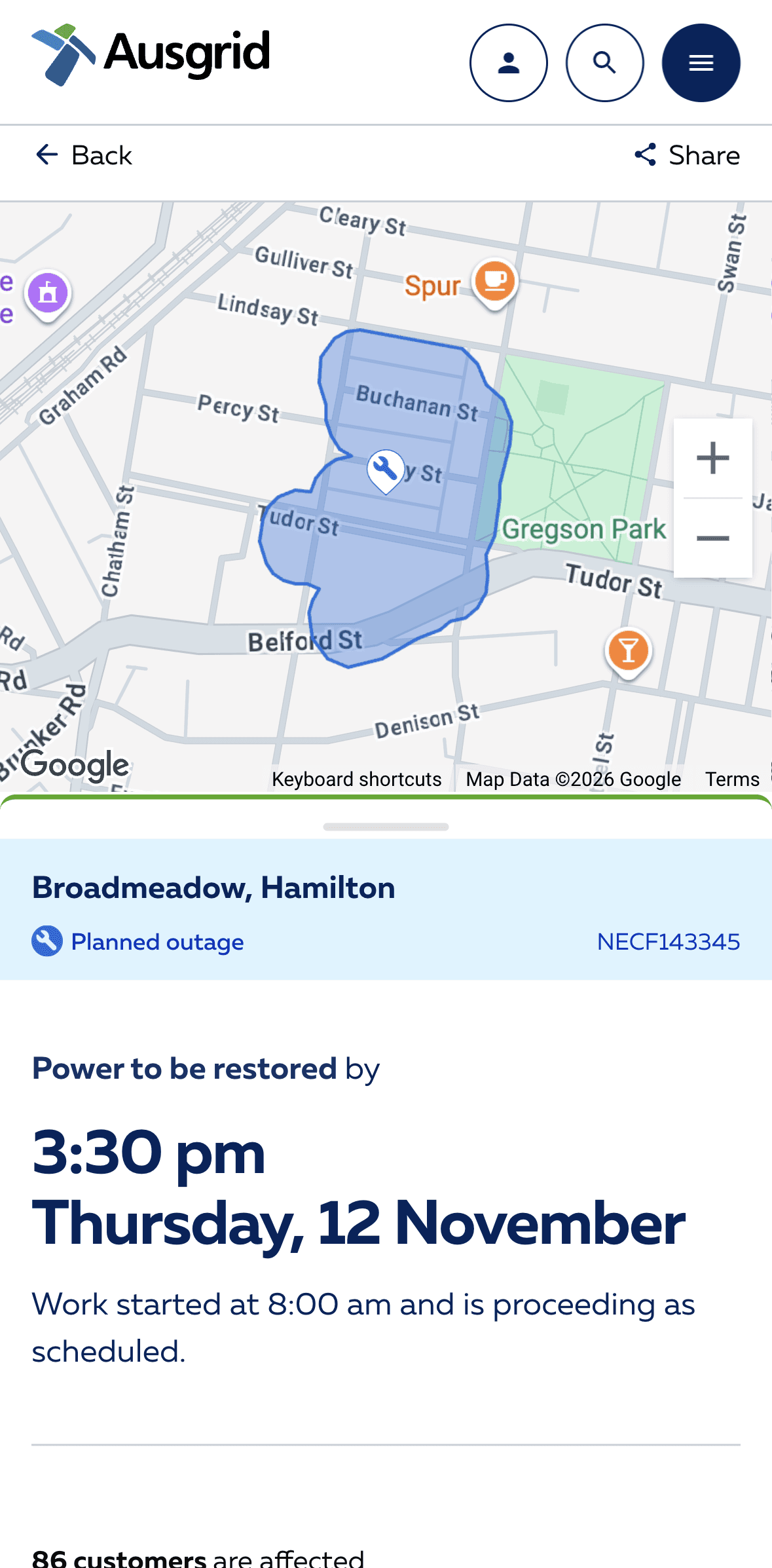
People open an outage map when the power is already out, usually on a phone because the home internet is down, and often in the middle of a storm. It has to be fast when nothing else is.
Context
Ausgrid keeps the power on for 1.8 million homes and businesses across New South Wales. When a major storm hits, tens of thousands of them visit the website at once, all asking the same question: when will my power be back?
Switch was moving Ausgrid's corporate site and five microsites to Sitecore. At the centre of it was the outage map, which was slow, dated and missing features. I joined Switch's team as the sole front-end developer on the new map.
The challenge
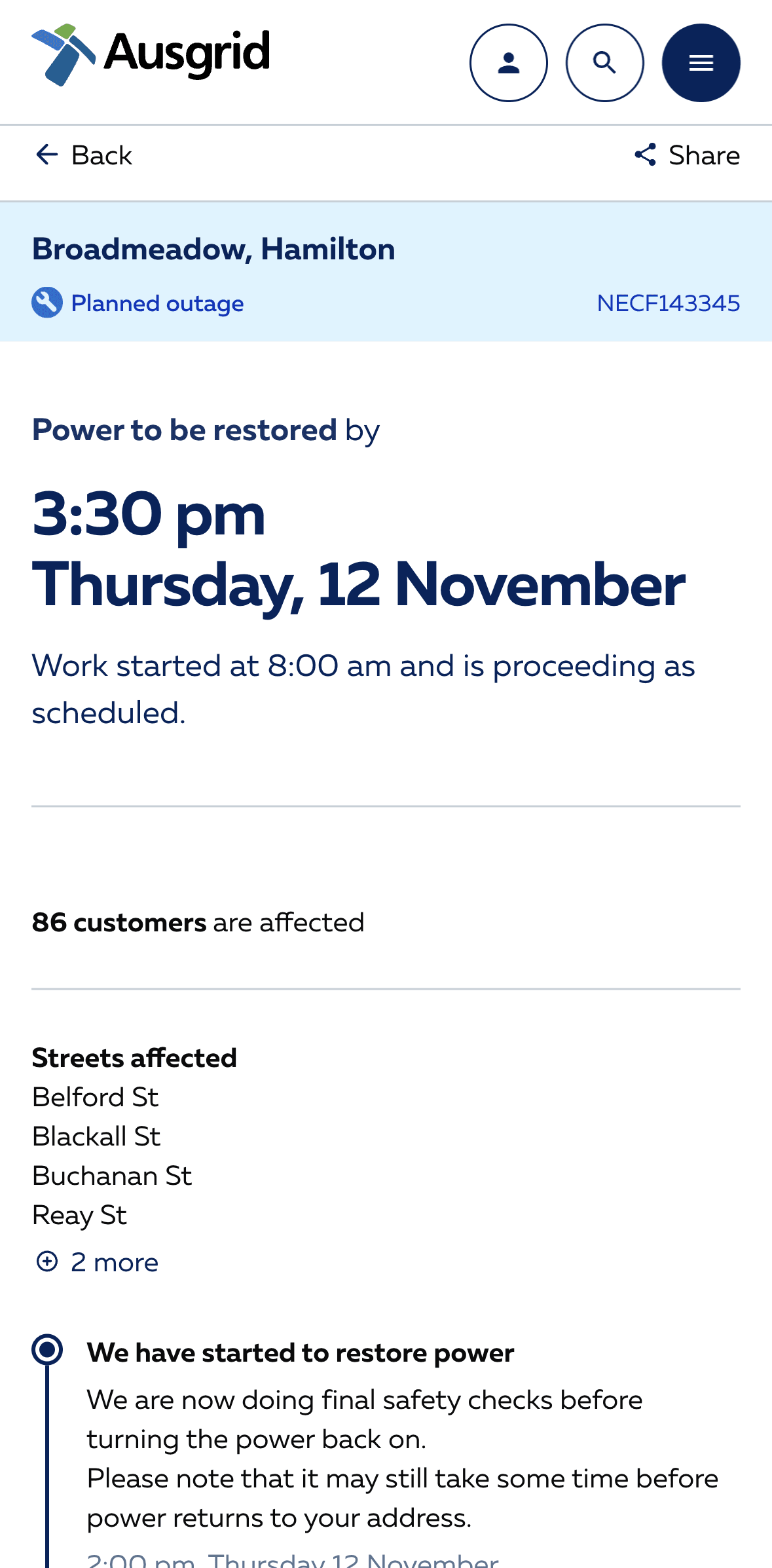
The map shows every current and planned outage across the network, with detailed polygons, pins and restoration times. When a big storm hits, outages multiply, and the data grows at the very moment thousands of people rush to check the map.
With the power out, home internet often goes down too, so most people arrive on their phones, many of them slow, and already in a stressful situation. The map had to be easy to use on a small screen, stay fast on older devices and hold up under heavy traffic.
What I did
The API was still taking shape and the Sitecore XM Cloud repo was slow to work in, so I proposed building the map first as a standalone MVP. Using large sets of complex mocked data, I compared ways of fetching and drawing outages, from loading everything up front to loading only what's on screen. I tested each in various browsers, slow laptops and real mobile devices.
With the fastest approach proven, I brought the MVP into the production Sitecore XM Cloud monorepo and Switch's Recursion accelerator. The API returned every outage shape in a single list, so I wrote a server-side step to split them into separate polygons. That kept each request small and the map fast.
I built the map using reusable components and wrote detailed handover notes for Ausgrid's team. Those components have since been used to add map features to the site's other reporting forms.
The stack.
7 tools- Next.jsServer actions shape data before it reaches the phone
- TypeScriptTyped outage and polygon data
- TanStack QueryFetches only the outages on screen
- Google MapsClustered pins and outage polygons
- ZodValidates every response from a changing API
- Tailwind CSSStyles scoped to avoid host site clashes
- Sitecore XM CloudThe platform the map ships inside
Key decisions
Prove it outside the platform first. A standalone build let me test each approach against heavy, realistic data and compare them side by side, before anything touched the production repo.
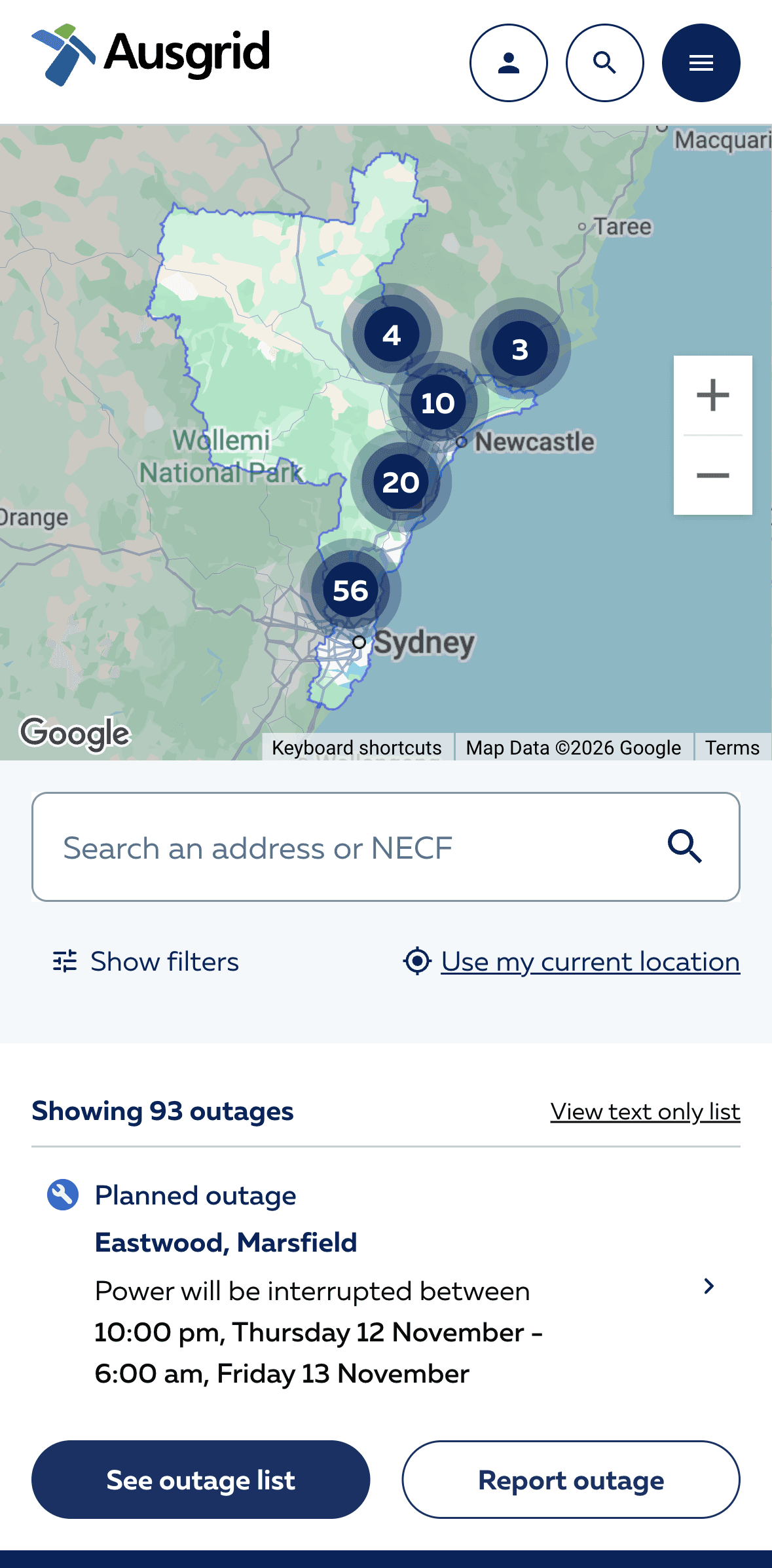
Only fetch what's on screen. As people pan and zoom, the map waits a quarter of a second, then asks only for outages in view. Zoomed out, outages show as clustered pins. Detailed polygons only appear once you're close enough to read a street.
Know where the network ends. Everything outside Ausgrid's network is shaded out, and an address searched outside it is flagged, so nobody waits on an outage that isn't Ausgrid's.
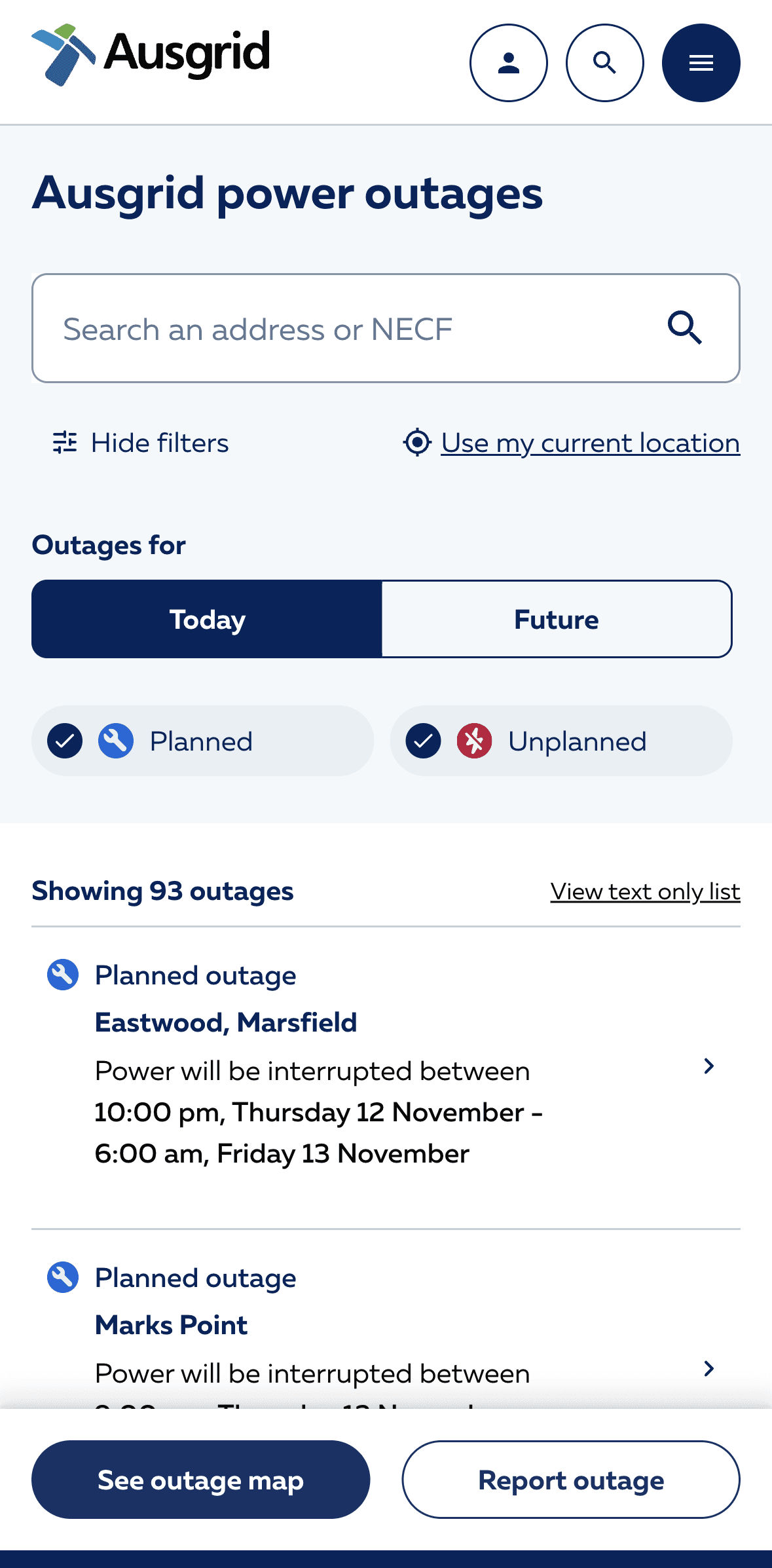
Don't make a phone do the work twice. On mobile, the map stays loaded while people switch between the list and the map, so it never has to redraw. New data loads quietly in the background, so the map is always up to date without a loading screen.
Outcome
The new map was ready for production ten weeks after the first commit, and went live with Ausgrid's rebuilt website in early 2026. Within weeks, web customer satisfaction rose 7.5%.
Ausgrid's Group Executive of External Affairs, Tim Jarratt, singled it out: customers now have "a new power outage map built for peak demand."
The project went on to win the 2026 Sitecore Digital Impact Award for Intelligent Tech Stack.