Hello Invoice,the tool I wished I had.
An invoicing and payments platform for freelancers, built with Next.js, Firebase and Stripe Connect. I designed it, built it, launched it and still run it.
- Client
- Own product
- Year
- 2025
- Role
- Founder, designer and sole developer
- Services
- Brand, Product design, Web app, Payments, Marketing site
An invoice is how a freelancer gets paid for work they've already done. It has to be quick to send, easy to pay and right every time, because it's their money on the line.
Context
I'd freelanced for years and tried most of the invoicing tools on the market. Some were too basic, some were built for agencies, and the rest had added so many features that sending a simple invoice was harder than it needed to be.
I saw room in the market for something narrower: a tool built specifically for solo freelancers, and no one else.
In June 2024 I started building my own as an unfunded side project. It launched in early 2025 and now serves freelancers in Australia, New Zealand, the US, the UK and Europe.
The challenge
I was the whole team: product, design, development, launch, support and marketing.
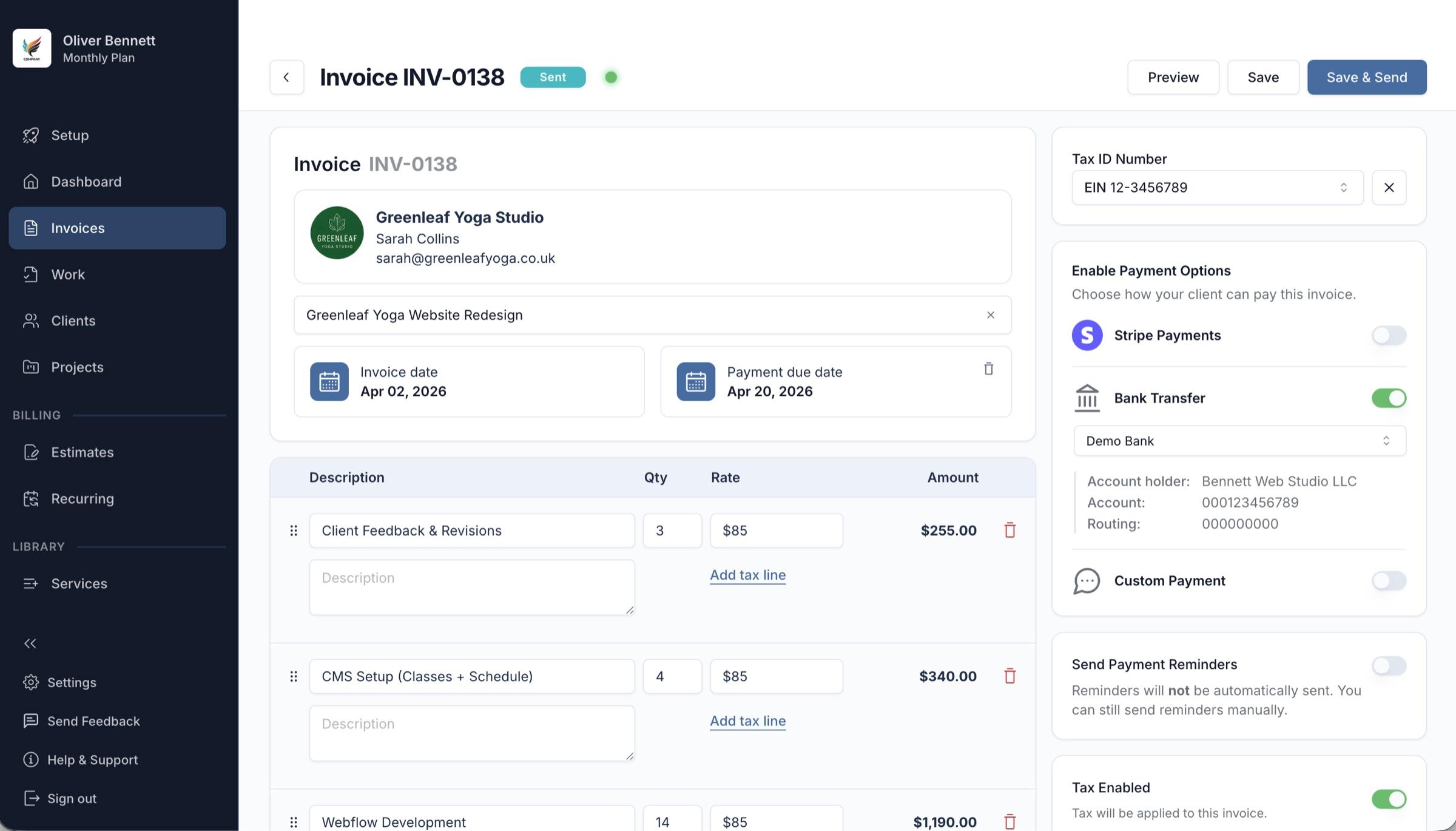
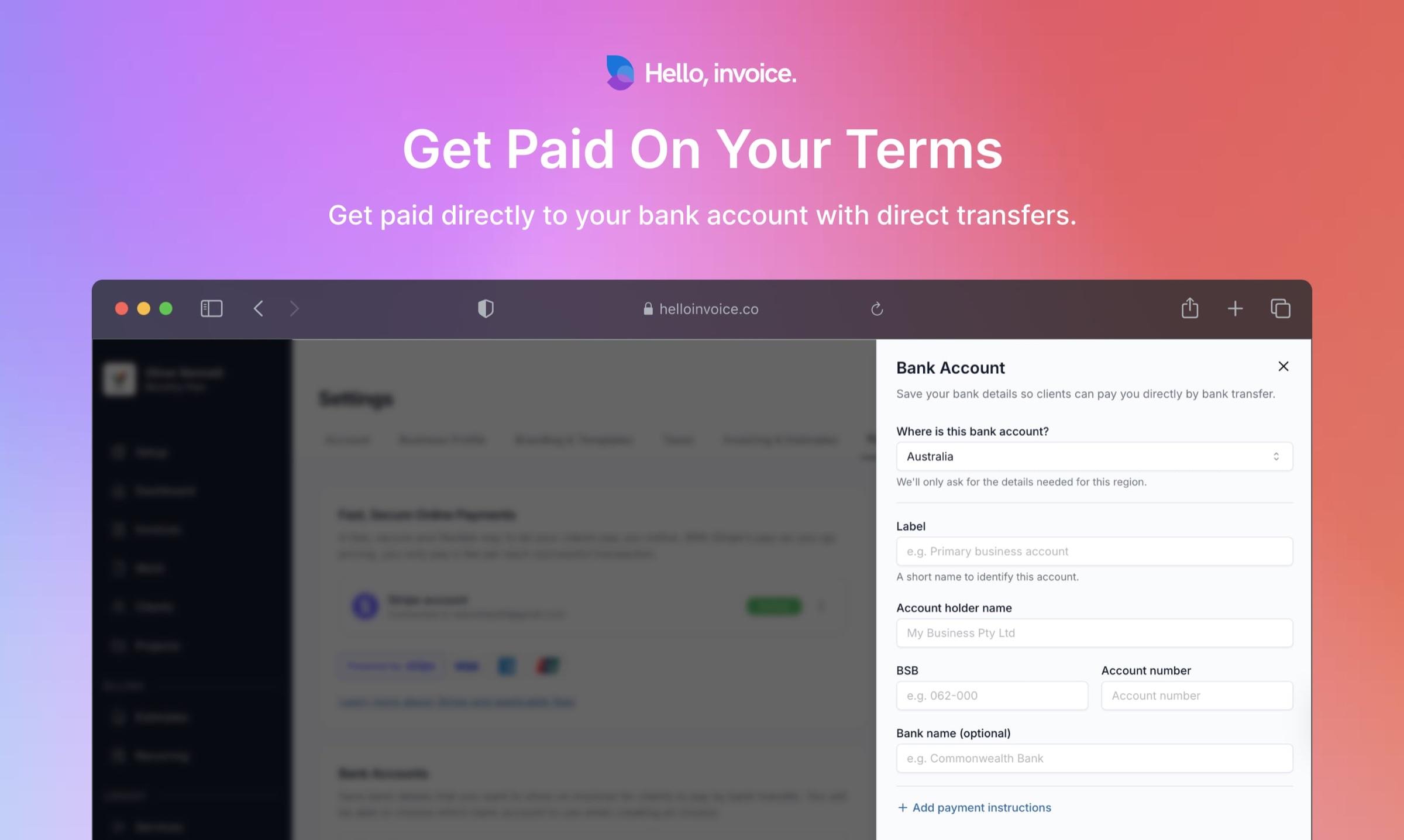
I had decided early on I wanted to launch in 5 countries from day one, so it couldn't be built solely around Australian GST. Each invoice line item needed to support several taxes, inclusive or exclusive, across five currencies, and the dashboards could never mix them up. And because it handles other people's money, billing had to be right every time: no double payments, no duplicate invoices, no email sent twice.
The product
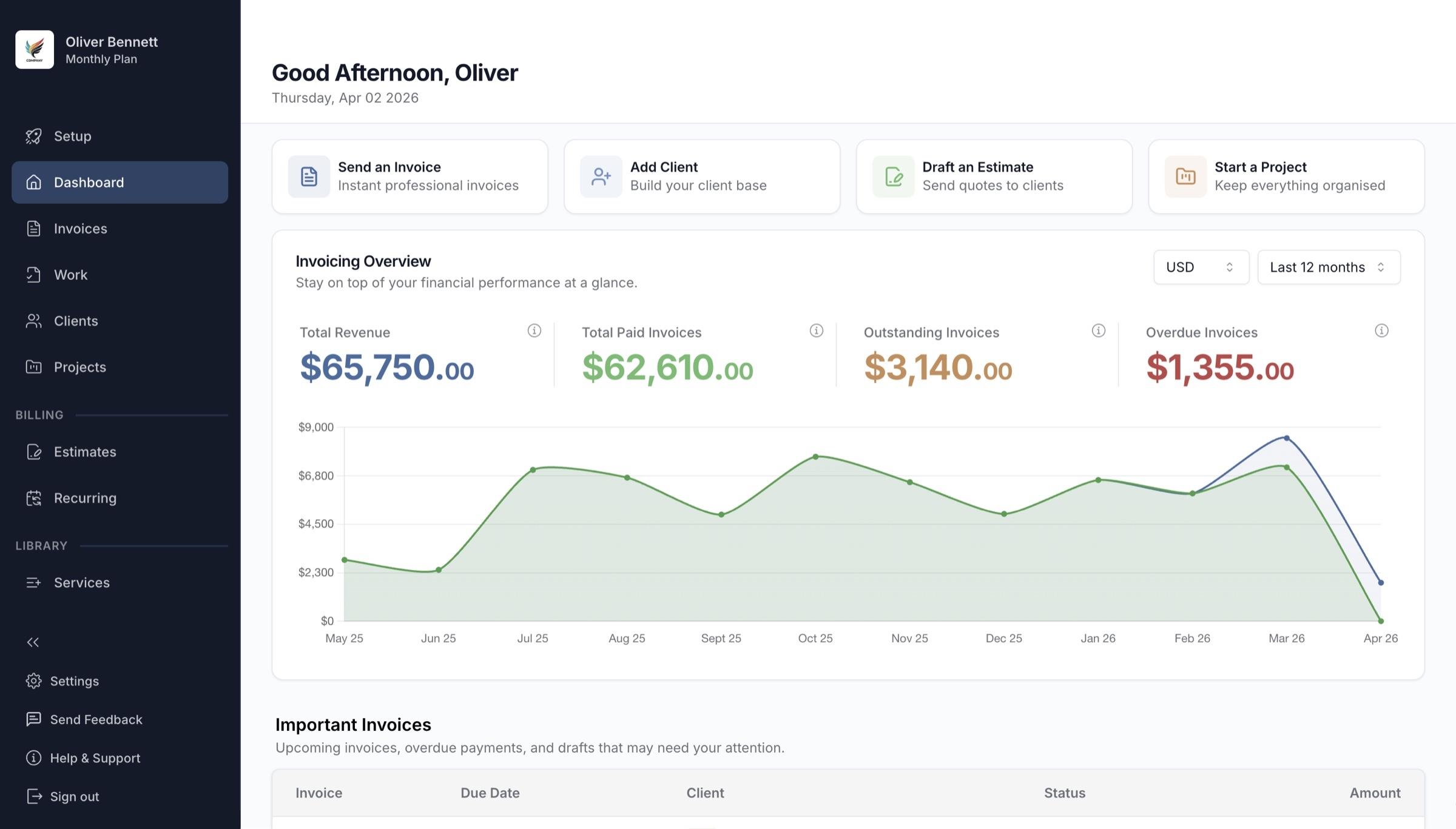
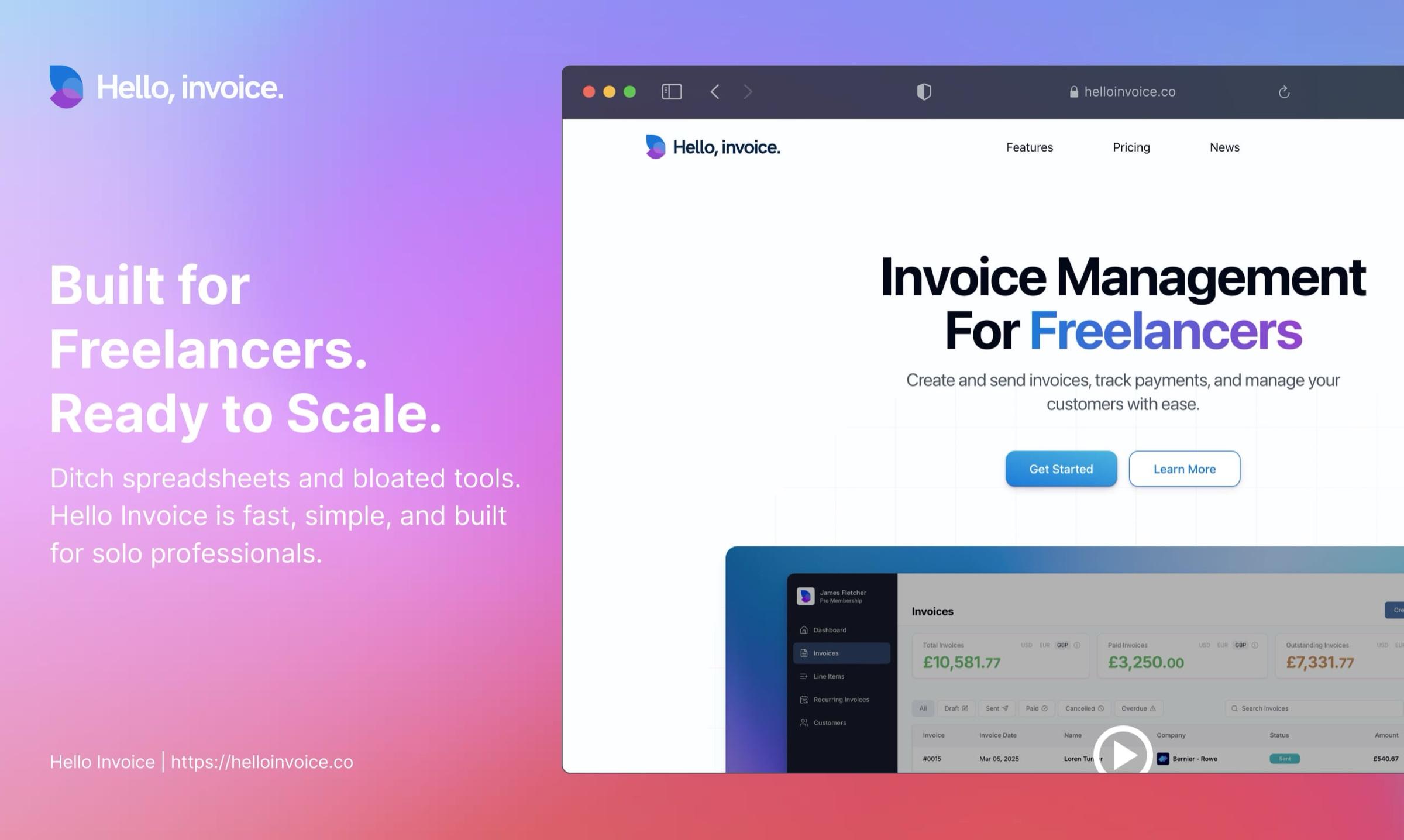
Hello Invoice follows a freelance job from start to finish.
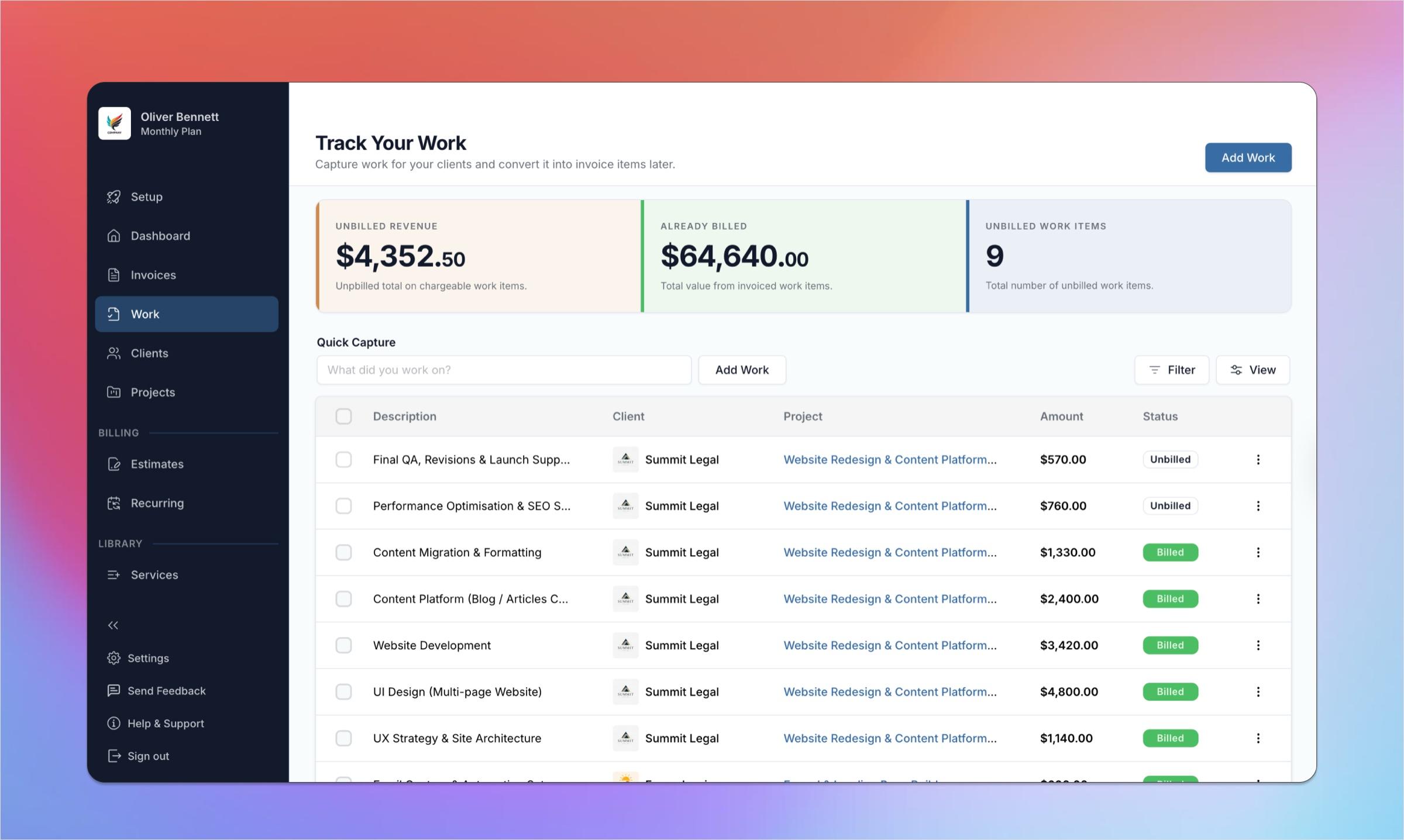
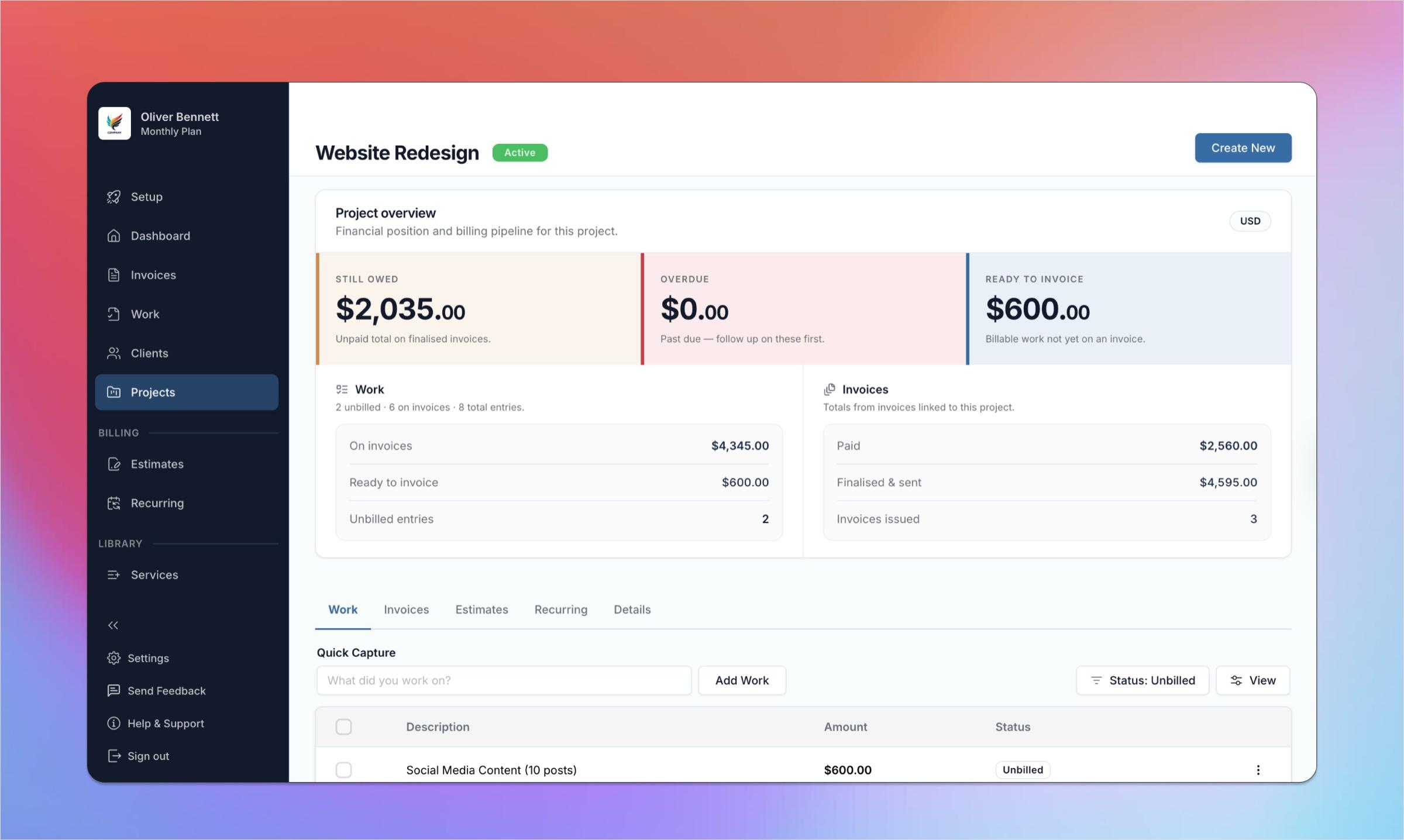
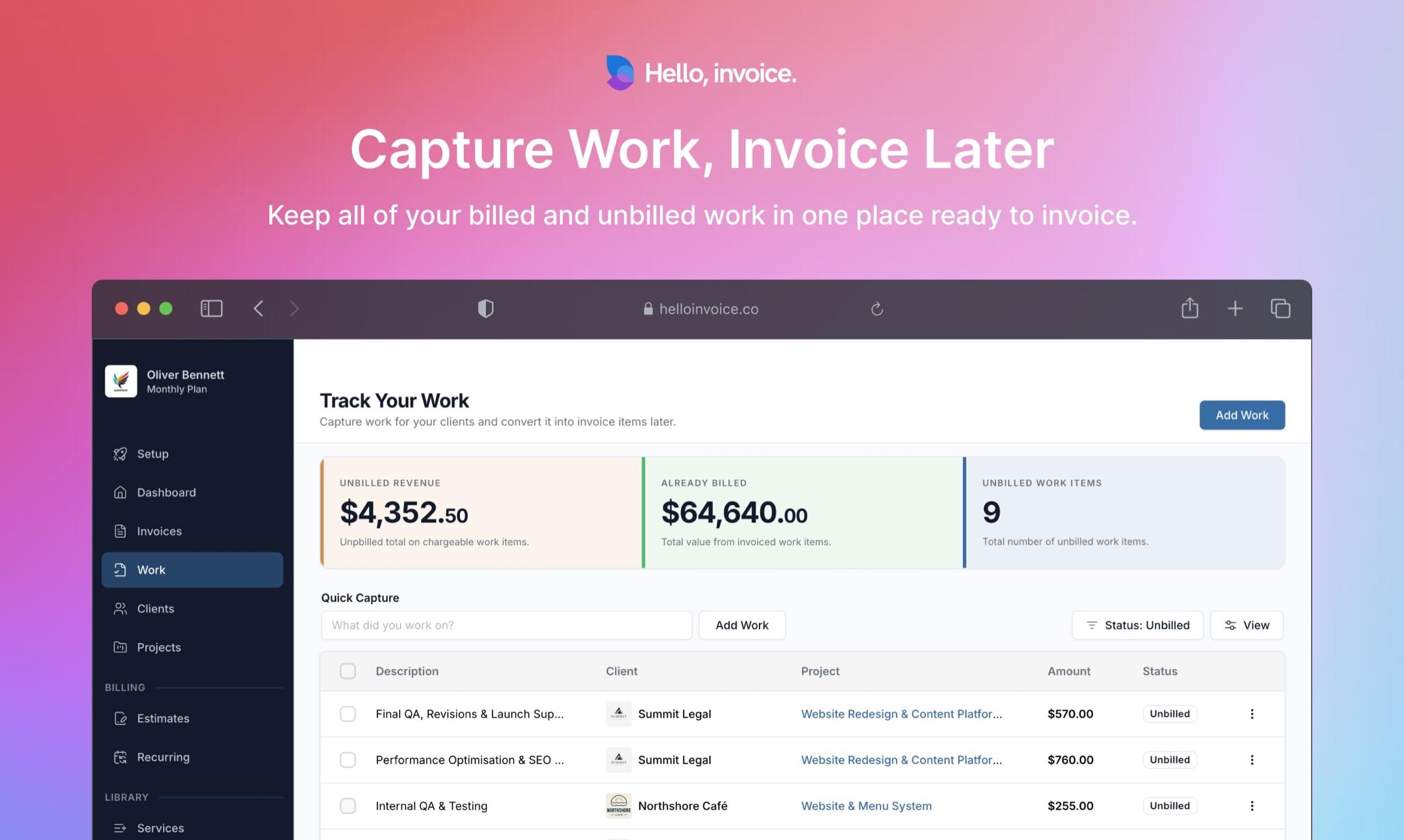
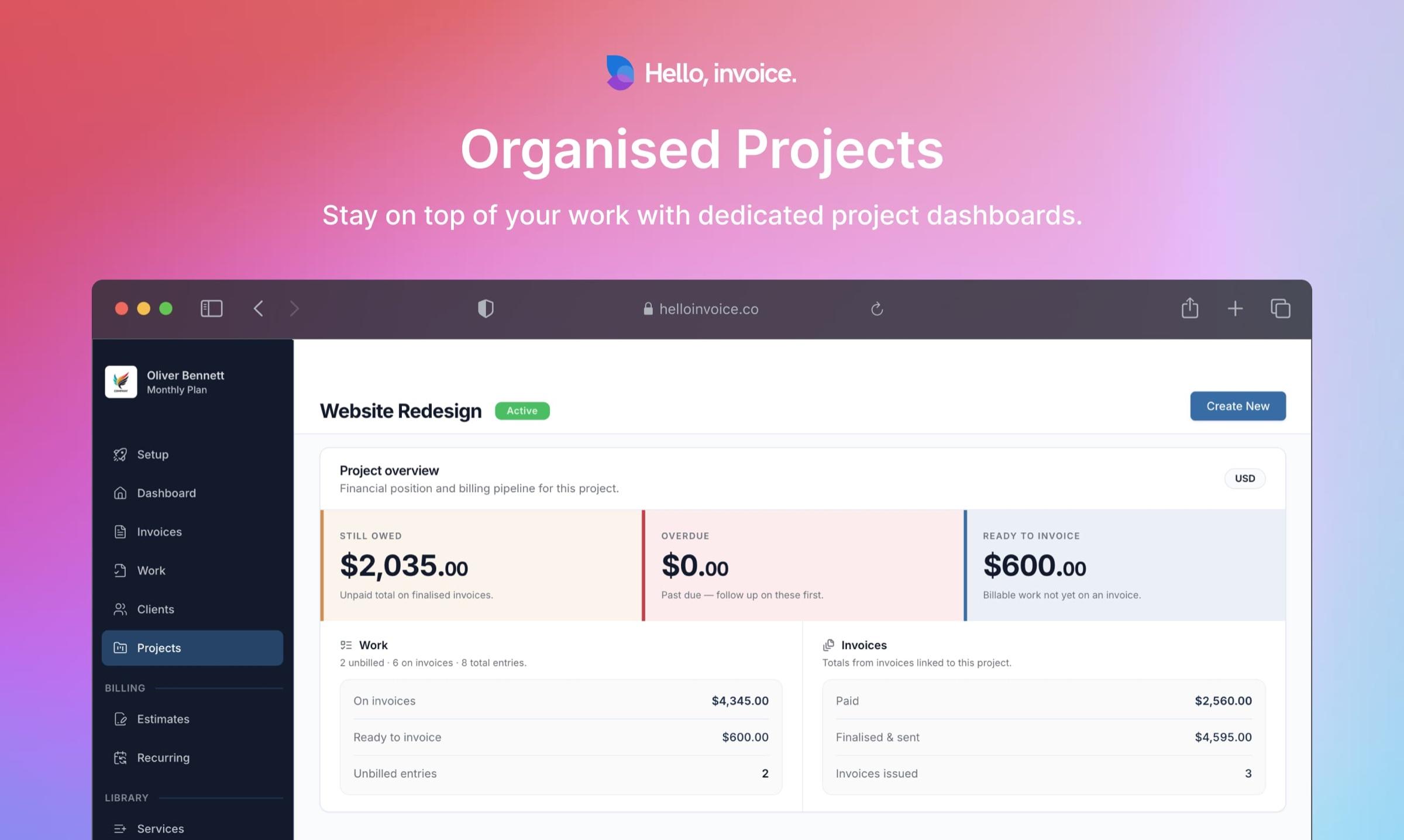
As the work happens, the freelancer logs it against a project. When it's time to bill, they turn the unbilled items into an invoice in a few clicks.
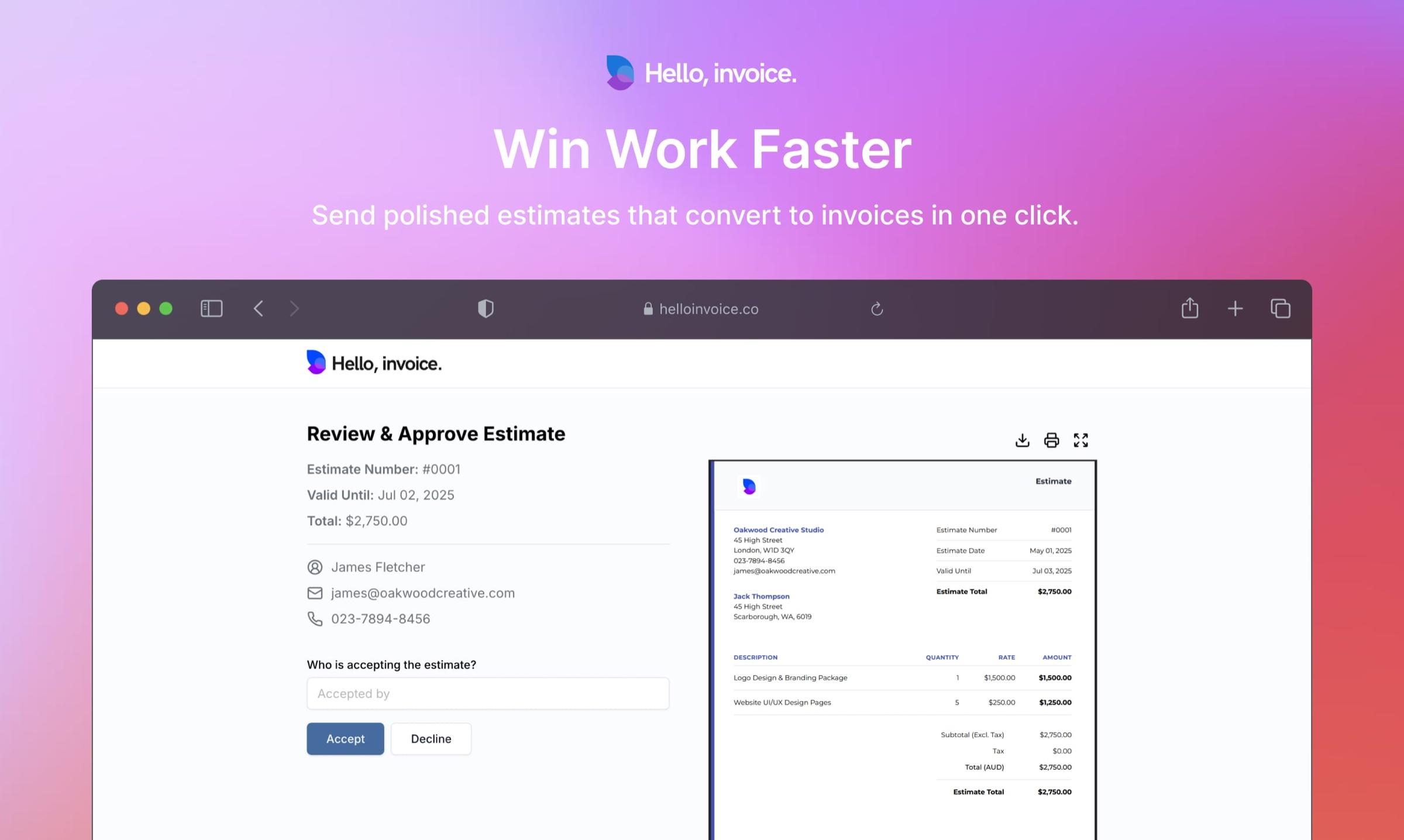
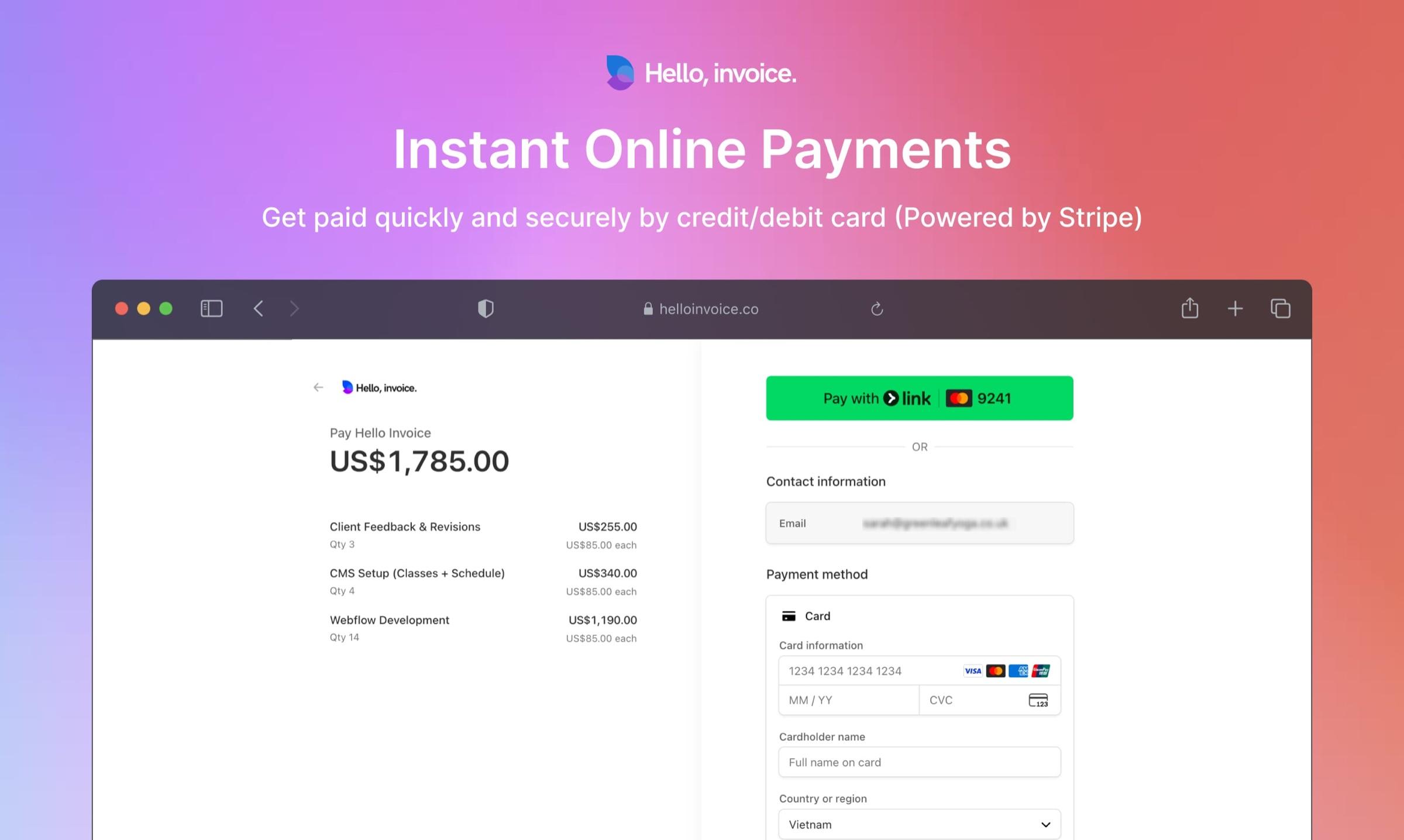
The invoice goes out as a PDF in one of many templates, with the freelancer's logo and brand colour and a Pay Now button. Emailed invoices get stylised previews and full PDF invoice attachements. The client pays by card without creating an account, the money goes straight to the freelancer's own Stripe account, and the invoice marks itself as paid.
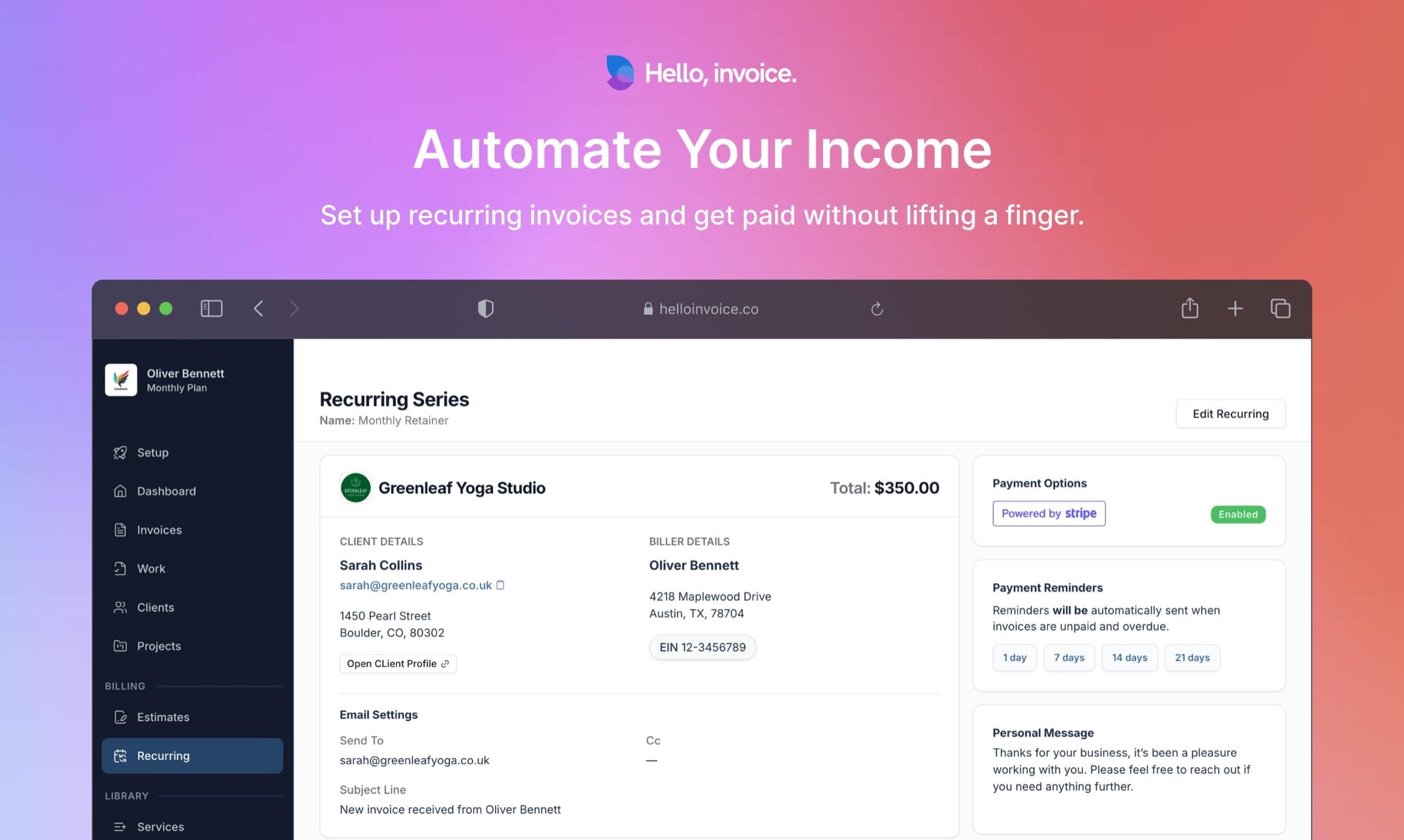
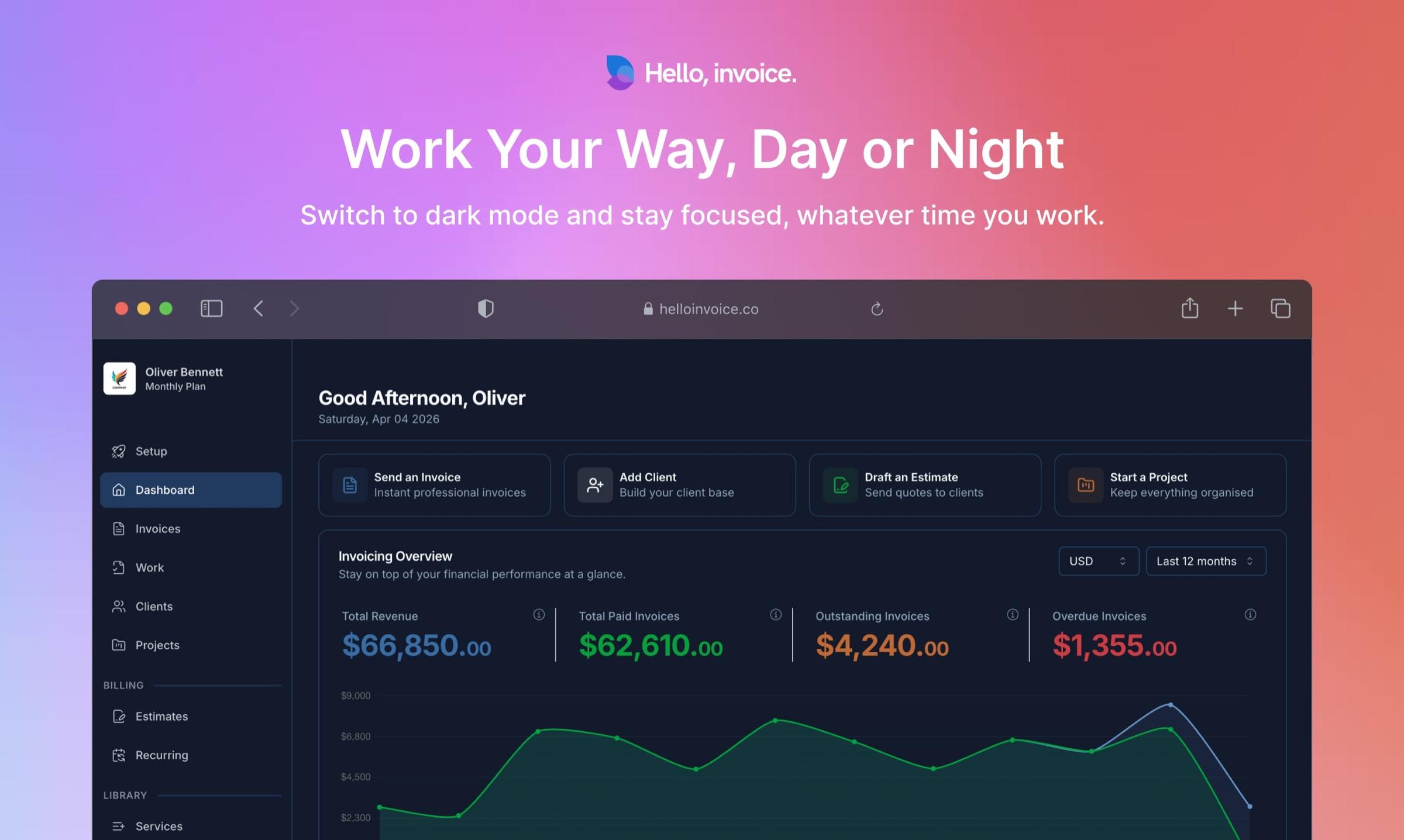
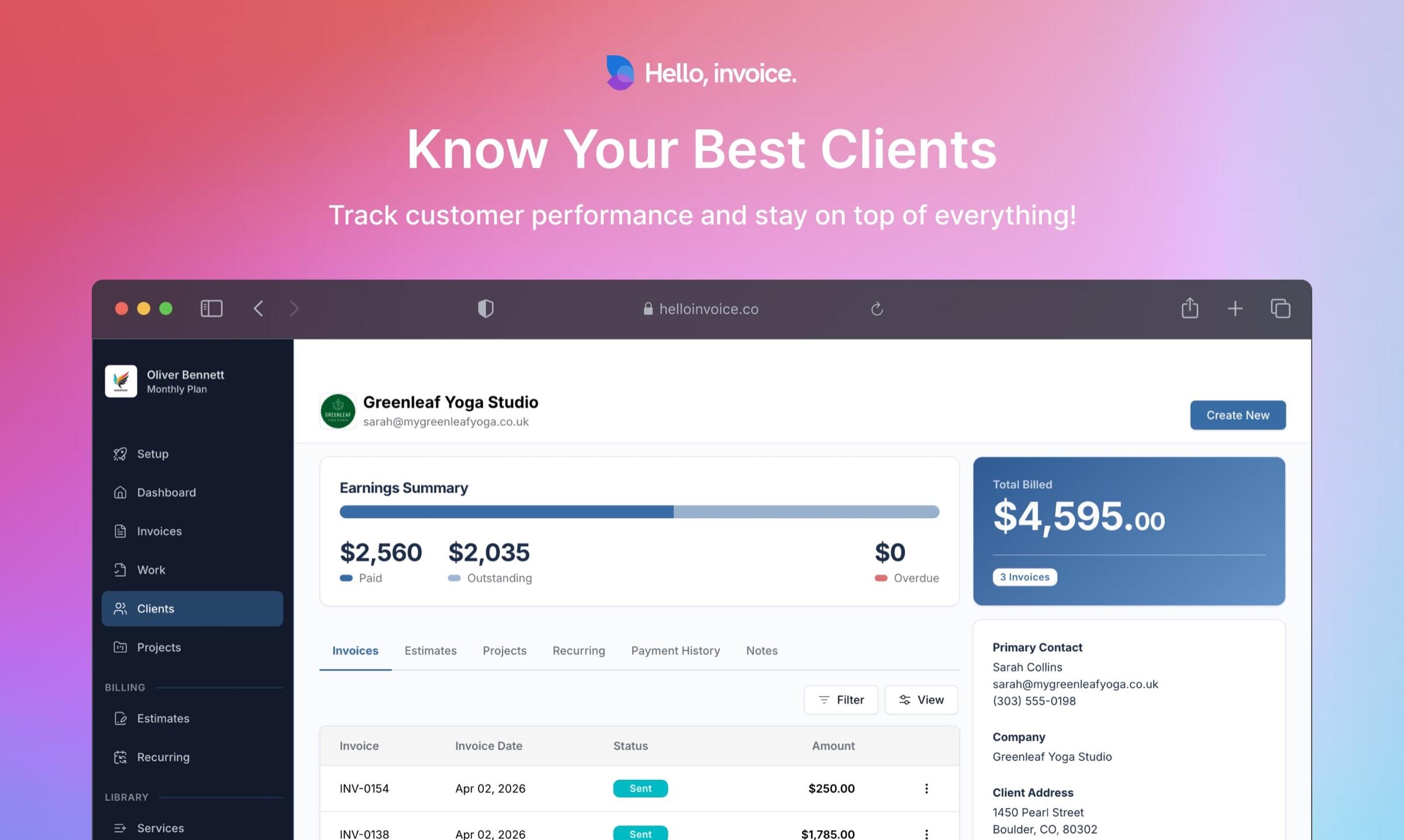
If a payment is late, reminders go out automatically, written in the tone the freelancer chooses. Regular clients can be set up with recurring invoices that go out on schedule. And the various dashboards give insights such as payment what's paid and oustanding, and how each project and client is performing.
How I built it
I designed the brand and the product, then built the app in Next.js on Firebase, with Stripe for payments, Inngest for background jobs and Resend for email.
I ran it like a client project: separate dev, staging and production environments, pull requests between them and error monitoring from the first release. Core invoicing shipped in 2024, international support in 2025, and work tracking, projects and estimates after that. More than 2,000 commits in, it's still a codebase I'm happy to open.
Under the hood
- Money is stored in cents, calculated with big.js and taxed per line, so totals never drift.
- Every payment link carries a signed, expiring token. Each payment is applied in a Firestore transaction tied to its Stripe checkout session, so if Stripe sends the same payment notice twice, the invoice still can't be paid twice.
- Recurring invoices, reminders and onboarding emails run as Inngest workflows. Each step retries on its own, so a failure never resends an email or duplicates an invoice.
- Cloud Functions keep dashboard totals up to date as invoices change. Each update is counted only once, and totals stay separate per currency, so there's no exchange-rate guesswork.
- Changes show instantly. A registry of cache keys knows every list, tab and counter an invoice appears in, and updates them all without reloading anything.
Seventeen services, one product.
17 services- Stripe BillingSubscriptions, trials and card management
- Stripe ConnectClient payments, straight to the freelancer
- Firebase AuthSign-in and server sessions
- Cloud FirestoreEvery invoice, client and project
- Firebase StorageLogos, resized on the server
- Cloud FunctionsWebhooks and live dashboard totals
- InngestRecurring invoices, reminders, onboarding
- ResendInvoice emails and open tracking
- Upstash RedisRate limits and session cache
- AlgoliaInstant client and project search
- reCAPTCHABot protection on sign-up
- QuickEmailVerificationBlocks throwaway email addresses
- ipapi.coPicks a default currency
- SentryErrors, performance and scheduled jobs
- MixpanelProduct analytics
- Google AnalyticsAcquisition
- Meta PixelAd attribution
Key decisions
Niche down. One kind of user, the solo freelancer. Every feature had to earn its place for them, which kept the product simpler than the tools I'd left behind.
Treat tax as data. In early 2025 I replaced every GST field with a general tax model: multiple named taxes per line, inclusive or exclusive, and tax IDs by country. It meant a rewrite, and it's what made the product work outside Australia.
Never hold the money. Client payments go through Stripe Connect straight to each freelancer's account, so Hello Invoice never holds or moves its users' funds.
Keep the database behind the server. The browser has no direct access to the database. Every read and write goes through a server action that checks who's signed in and who owns the record. Authorisation lives in TypeScript, where it can be reviewed, not in database rules.
The marketing site
A product nobody knows about doesn't help anyone. helloinvoice.co is a separate build with one job: bring freelancers in and get them to sign up. It has feature pages, six landing pages for different kinds of freelancer, pricing, and a blog and help centre run from Sanity. I designed the launch artwork for the site and socials, and promoted it on LinkedIn and in Facebook groups.
Search traffic needs a steady stream of useful posts, and I couldn't write one a day while building the product. So I built a pipeline of AI agents to write the first draft. Every morning it picks a trending topic it hasn't covered, researches it, writes and edits a post, and saves it as a draft. Nothing goes live until I've read, revised and published it myself.
Blog writing agents
- Built on the Claude API and run daily by GitHub Actions. Opus researches and writes; Sonnet handles SEO and the final edit.
- No free-text parsing. Each agent returns structured output through a forced tool call with a JSON schema.
- No repeats. The research agent searches the web and checks a ledger of past topics in Sanity before choosing one.
- CMS-ready. A small, tested converter turns the Markdown into Sanity's Portable Text.
- Agent-readable. The site also serves a Markdown version of each page to AI agents that ask for one.
- 01ResearchPicks an uncovered topic from live search
- 02WriteDrafts the post
- 03SEOTitles, keywords, meta
- 04EditRewrites to sound human
- 05DraftSaved to Sanity, unpublished
- 06I publishNothing goes live unread
Outcome
Hello Invoice is live, and I'm still shipping updates. As a product, it does everything I set out to build.
As a business, it taught me more than any client project. I'd spent my career building for other people; this time I owned everything after launch too, from pricing and positioning to marketing and support. The biggest lesson was that building the product is the smaller half of the job. Next time, I'd launch earlier and start marketing on day one.
Before this, invoicing always got pushed to the end of the month. Now it takes less than 10 minutes, my projects stay organised, and I get paid with way less chasing.